When choosing a home, we often begin with rational criteria – square meters, number of rooms, layout, price, and location. These factors are measurable, comparable, and seem objective. However, the moment we step across the threshold of a new home, the decision is often determined by something entirely different – a feeling. Does it feel easy to breathe here? Does the space feel harmonious? Can I imagine my daily life here? This is where the true importance of interior design reveals itself. It becomes an invisible yet often decisive indicator of quality.
Interior designer Eva Staņeviča places the human being at the center of her professional philosophy. “I represent the principles of the New European Bauhaus, which also shape the way we look at choosing a home – the space must serve the person, not the other way around. Design is not a self-serving aesthetic experiment. It is a tool for improving quality of life.”
Interior design is not decoration or a superficial visual layer. It is more like an invisible mechanism that functions without us noticing, shaping our daily habits, movements, mood, and even the dynamics of our relationships. Staņeviča emphasizes that a well-designed interior begins not with the choice of colors or a furniture catalogue, but with usability. “I always start with how the space is used – with the flow of movement and everyday habits. Only then come form, materials, and visual atmosphere,” she explains. This sequence ensures that aesthetics are grounded in functional logic.
In everyday life, we rarely notice the ergonomics of a space when it has been thoughtfully designed. But we quickly notice when it has not. Insufficient storage space, inconvenient movement between the kitchen and dining area, poorly positioned workspaces, or inadequate lighting create tension that gradually accumulates. A space where movement feels intuitive and logical, on the other hand, creates a sense of comfort and security. As the designer notes, form and function should never compete – they must complement each other.
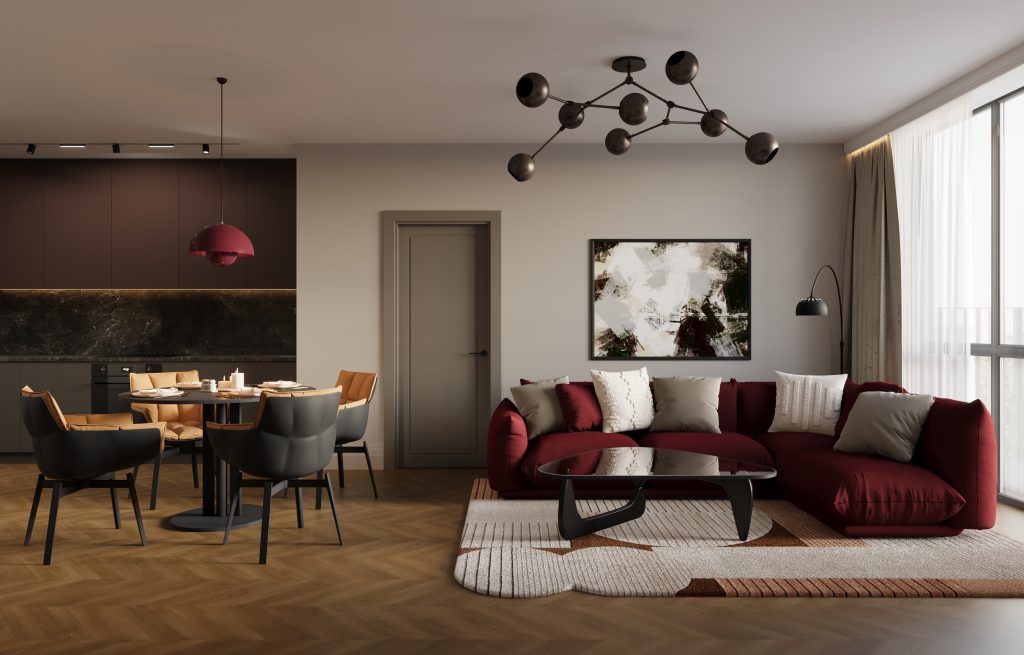
A home is also an emotional resource. The color palette, textures of materials, lighting scenarios, and proportions directly influence how people feel. A harmonious environment helps restore energy, focus on work, and spend quality time with family. “For me, the most important thing is to create an environment that serves the person – a space where it feels good to live, work, and return to,” says Staņeviča.
When choosing a home, it is equally important how the interior aligns with the architecture and the surrounding environment. Design should not compete with the character of the building. Instead, it must be created in close dialogue with architecture, proportions, and context. If a building has large windows and abundant natural light, the interior should enhance it. If the architecture is structured and elegant, the interior material choices should be equally thoughtful.
Equally important is the question of quality and long-term value. “If the foundation is solid and of high quality, people can safely bring their own personality into the space,” Staņeviča emphasizes. This means carefully chosen flooring, quality plumbing, good ventilation, and materials that retain their aesthetic value over time. Such an approach allows interiors to adapt to changes in life stages without requiring radical renovations.
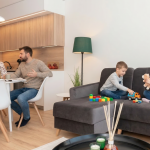
The pace of modern life also demands flexibility. Spaces must be able to transform according to the rhythm of the day. In the morning it may function as a workspace, in the evening as a place to relax, and on weekends as a setting for meeting friends. Multifunctionality and adaptable layouts are becoming increasingly important indicators of quality.
Interior design also influences our emotional stability in the long term. A space shaped by short-lived design trends can quickly become tiring. A balanced and thoughtfully designed interior, on the other hand, retains its value for years. Staņeviča notes that her goal is “to elevate people’s quality of life through knowledge and experience.”
A home is not merely real estate or an investment. It is the foundation of everyday life – a place where memories are created, relationships develop, and the rhythm of life takes shape. A space where we feel balanced influences our thinking, productivity, and even our ability to rest. For this reason, the importance of interior design in choosing a home is becoming increasingly significant. A space that truly serves people is ergonomic, aesthetic, sustainable, and emotionally balanced.